Format 01
Live screen printing
The original live-printing spectacle: a real press, real ink, and a printer pulling your design onto a shirt thirty seconds after a guest picks it.
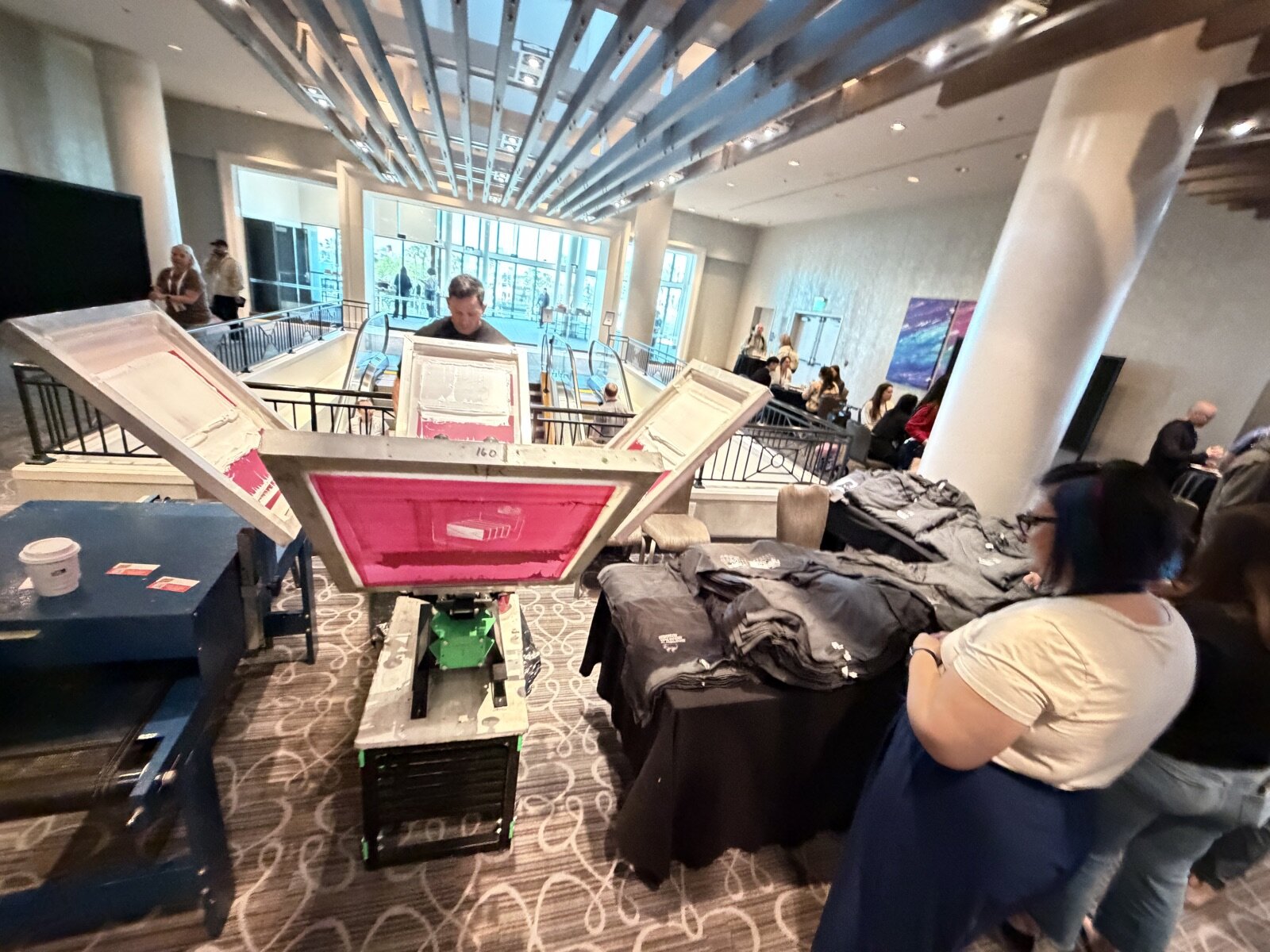
Screen printing is the format people picture when they imagine a live merch activation, and for good reason: it’s the most theatrical way to put ink on a shirt. The screen swings down, the squeegee pulls, the platen rotates, the flash unit glows — and a finished print emerges while the guest who chose it films the whole thing. At a corporate summit we printed for a national bank in Century City, the press drew a standing semicircle of executives within ten minutes of doors opening. The machine is the marketing.
How it runs at your event
We arrive two to three hours before doors with road-cased manual presses, flash-cure units, and a conveyor dryer when volume calls for it. Your guests browse a short menu of designs — usually two to four, prepped by our art team in pre-production — pick a garment and size from the staged colorways, and watch their piece printed and cured on the spot. Each press moves up to 60 pieces an hour, and our standard crew of two printers across two stations keeps a long line moving without anyone feeling rushed.
What it’s best at
- Volume with spectacle. No other live format matches the throughput — this is the pick when 500+ guests all need to leave wearing something.
- Bold, brand-forward graphics. One- to three-color designs with Pantone-matched inks look unmistakably crafted, not printed-on-demand.
- Anchoring a booth. At trade shows the working press is a traffic magnet that out-pulls any LED wall on the aisle.
We supply the blanks — retail-quality tees, hoodies, and totes in your size run — and the ink colors are matched to your brand guidelines during art prep. Want full-color photographic art or individual names instead? Pair the press with a DTF station, or add a hat bar so there’s a second experience for the queue.
Planning tip: a two-press setup in a 10×20 footprint is the sweet spot for conferences of 300–800 attendees — enough throughput to serve everyone across a four-hour window without the line ever dying.
More ways to print live